It is the most frequently asked question in every camper group, and the most poorly answered: «Can I stay here for one night?» The honest answer is: it depends. On the canton, the municipality, the ground, and sometimes on whether or not you put your camping chairs out.
- In protected areas (national park, hunting reserves, moorland), overnight stays are absolutely off-limits, so check map.geo.admin.ch beforehand.
- Otherwise the cantons decide, and ultimately the municipalities: there is no single Swiss rule.
- It is not sleeping that matters but your behaviour: chairs and an awning turn parking into camping.
- Private land with the owner's permission is always legal, and that is what Parkn'Sleep is built on.
The key difference: parking vs. camping
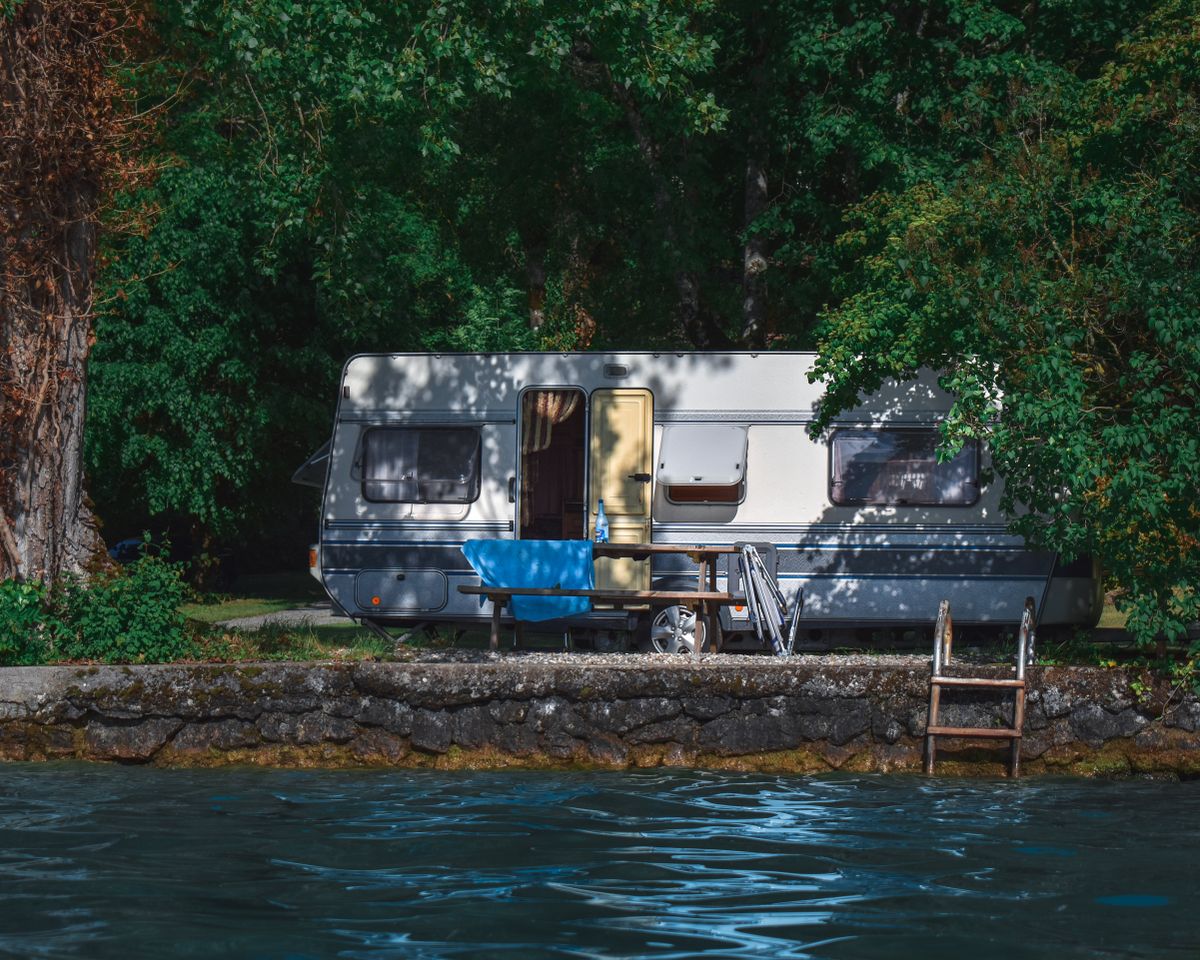
Legally, what matters is not whether you sleep in your vehicle, but whether you are «camping». If you spend the night in a regular car park without setting up an awning, chairs or a barbecue, in many places you are simply parking, and that is generally allowed wherever parking is allowed. But as soon as an awning, a table or a stove comes into play, parking turns into camping. And much stricter rules apply to that.
This distinction explains why the same spot works perfectly for one camper and gets the next one a fine: it was not the place that was different, it was the behaviour.
The ladder of responsibility: federal, cantonal, municipal
The federal government only regulates the absolute no-go zones: in the Swiss National Park, federal hunting reserves, nature reserves, wildlife rest areas and moorland landscapes, overnight stays are prohibited without exception, no matter how discreetly you park. You will find all of these zones on the official map at map.geo.admin.ch; five minutes there will save you the most expensive fine of your trip.
Everything else is up to the cantons, and ultimately the municipalities, which may issue their own rules. The foundation is the so-called right of public access (Art. 699 of the Swiss Civil Code), which in principle makes forests and pastures accessible to everyone. However, accessible means you can walk there, not live there, and it does not apply to vehicles anyway, as they are not allowed to leave the roads in the first place.
The cantons in brief
The liberal ones: Aargau and Obwalden explicitly allow one night: in Aargau in public car parks without a no-camping sign, in Obwalden on the basis of the cantonal camping law. Always without camping behaviour, and the municipality can still decide otherwise.
The strict ones: Ticino prohibits camping outside authorised sites by law, including overnight stays at rest areas and in car parks. Valais does the same, with a ban on overnight stays at motorway rest areas. In cantons such as Bern, Glarus, Solothurn, Lucerne, Neuchâtel, Thurgau or Graubünden, wild camping is generally not allowed.
The rest: everywhere else, the rule of thumb is «generally no, the municipality decides», which is why the TCS also advises checking locally with the municipality, the tourist office or the police if in doubt.
Three exceptions are recognised almost everywhere: the emergency bivouac, overnight stays on private land with the owner's permission, and a single night in a small tent above the tree line, which the Swiss Alpine Club considers unproblematic. The last one, however, does absolutely nothing for you in a camper.
Depending on the location, fines range from the price of an expensive dinner to that of a very expensive weekend; in Ticino, the legal range goes up to 10,000 francs. Things get really costly in protected areas and if you drive off paved roads.
💡 The shortcut: on Parkn'Sleep, all 10,000+ pitches are agreed with their owners. A green pin means: you will never have to have this discussion.
Three rules of thumb for the road
First: a look at the signage beats any internet wisdom. Local bans always take precedence, including over what you read in forums.
Second: if you arrive late, leave early and set nothing up, you are within the tolerated range in many regions. That is no guarantee, but it is common practice.
Third: private land always works: with the owner's permission, every night is legal. The farmer who owns the meadow is allowed to invite you. Parkn'Sleep is built on exactly this principle: we get the permission before you arrive.
Our canton reports show what this looks like in everyday life: Ticino, the Scuol court case (Graubünden) and the liberal exceptions of Aargau & Obwalden.
And abroad?
In short: France is more relaxed (keyword «aire de camping-car»), Italy is mixed, Austria is stricter than Switzerland in many federal states, and Germany allows one night to «restore fitness to drive». If you cross the border, you should know the logic of the country in question. You will find the big overview from Scandinavia to Portugal in our Europe guide.
This article is not a substitute for legal advice and gives a simplified picture as of July 2026. The regulations of the canton and municipality on site are binding.