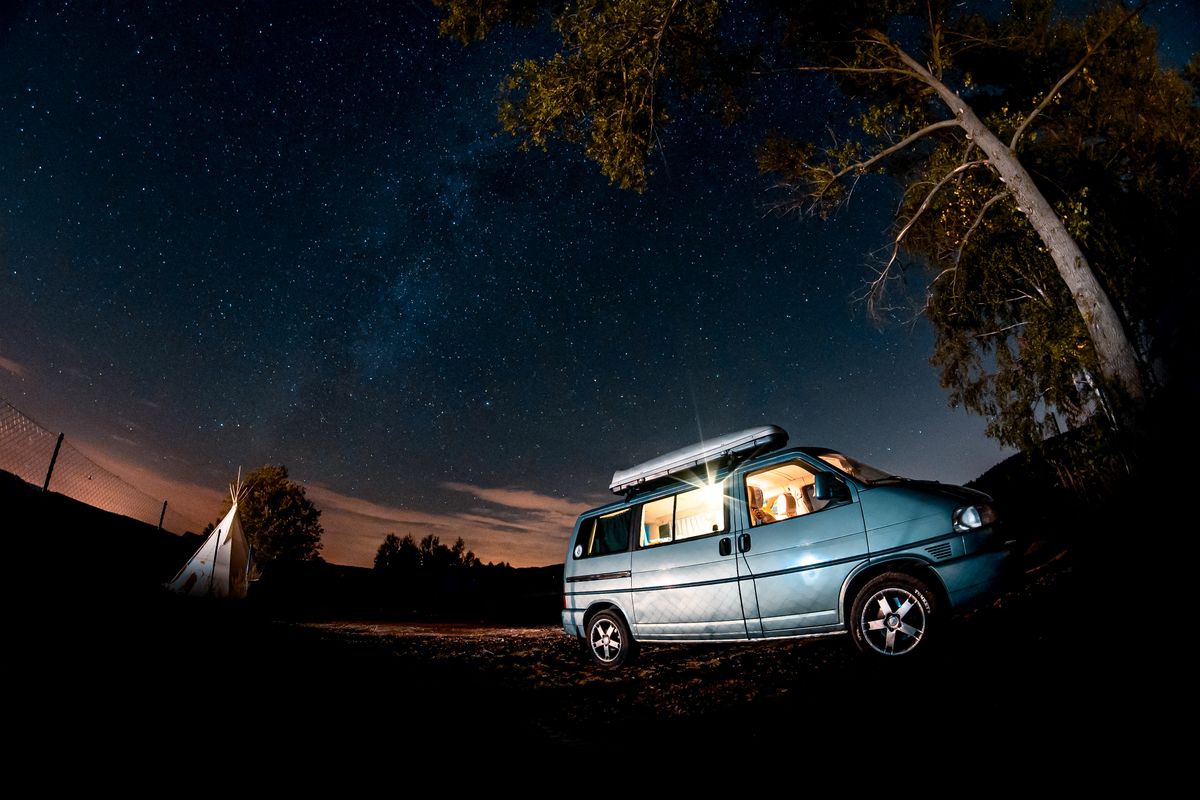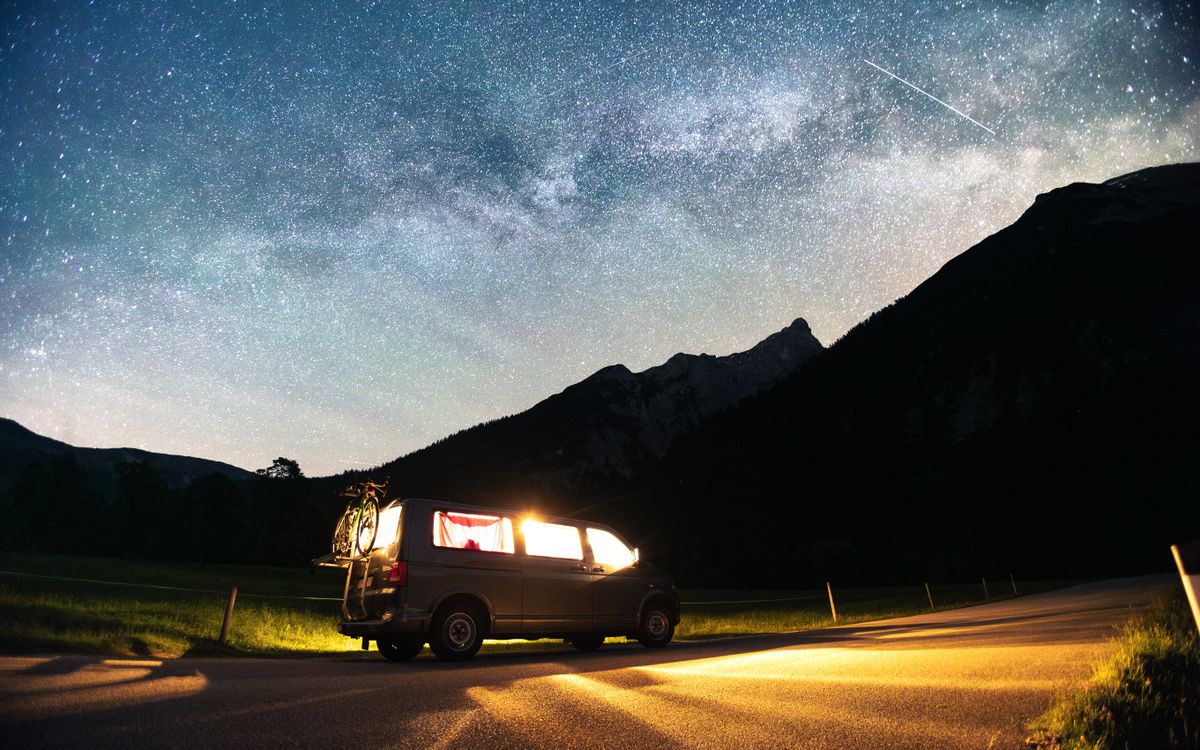
Winter camping is the most beautiful niche of the whole hobby: empty pitches, clear air, snowy panoramas. But it is also the least forgiving: at minus ten degrees, your gear tolerates no compromises. Here is what really counts, based on guides from TCS, roadsurfer and others plus the experience of our community.
- Propane, not butane: butane fails around freezing point, only propane-rich gas works in winter.
- Don't underestimate consumption: in frosty weather, heating quickly uses 3 to 5 kg of gas a day.
- Cold comes from below and through the windows: thermal mats and floor insulation before any gadget.
- Moisture is the silent enemy: ventilate consistently and keep wet things out of the living area.
Gas: physics decides, not the brand
The most important winter fact is not printed large enough on any packaging: butane barely vaporises around freezing point, so only propane-rich gas, which stays gaseous even in hard frost, is suitable for winter. In Switzerland and Germany the usual cylinders are fortunately mostly filled with propane; if you swap cylinders abroad, take a closer look (and carry the right adapters).
The second surprise for winter newcomers: consumption. If you heat around the clock, depending on your vehicle's insulation you can easily burn three to five kilograms of gas a day, so two 11-kilo cylinders barely last a week in hard frost. An ultrasonic level gauge or remote monitoring along the lines of Truma LevelControl will spare you a nasty surprise at three in the morning.
And one detail that catches even experienced campers out: at low temperatures, the gas pressure regulator can ice up and the gas flow can falter. Heated regulator attachments help, and if you install an automatic changeover with a crash sensor, you can even heat while driving and arrive already warm.
Keeping warm: insulation beats heating power
The cheapest winter upgrades are passive ones: thermal mats for the windscreen and side windows (glass is the biggest thermal bridge in the whole vehicle), rugs against the cold floor, winter duvets and sleeping mats with a decent R-value in your bed. A porch tent acts as a cold airlock and also takes your wet ski gear, which would otherwise release its moisture into the living area.
Power and diesel: the overlooked reserves
If you leave the parking heater running at night, keep an eye on your battery: even economical heaters are a relevant consumer over several hours. The solution is a leisure battery, mains hook-up or regular driving. Diesel heaters come with a second rule: never let the tank run dry, or you will be stuck in the cold. And for your hook-up cable: choose frost-proof quality, or the sheath will turn brittle when it is below zero.
💡 Choosing a pitch in winter: look for heated shower blocks, drying rooms and gas cylinder exchange on site, and check that your pitch is open at all. On Parkn'Sleep, the «Open all year» filter shows you the pitches that stay open through the winter.
Safety: two rules without exception
First: every heated camper needs a CO detector. Carbon monoxide is odourless, and snow can block exhaust outlets and vents, so clear the roof and flue after every snowfall. Second: ventilating is not optional, it is a must. Two sleeping people release almost a litre of water into the air every night, and without air exchange it ends up as condensation on windows and walls, and in the long run as mould behind the furniture.
Researched in guides from TCS Camping-Insider, roadsurfer, promobil and camperstyle, among others. As of July 2026.